- Focuses on predictive analytics, machine learning, and natural language processing.
- Navigates Indonesia’s robust data privacy regulations and intellectual property laws.
- Connects clients with skilled software engineers and AI specialists from the region.
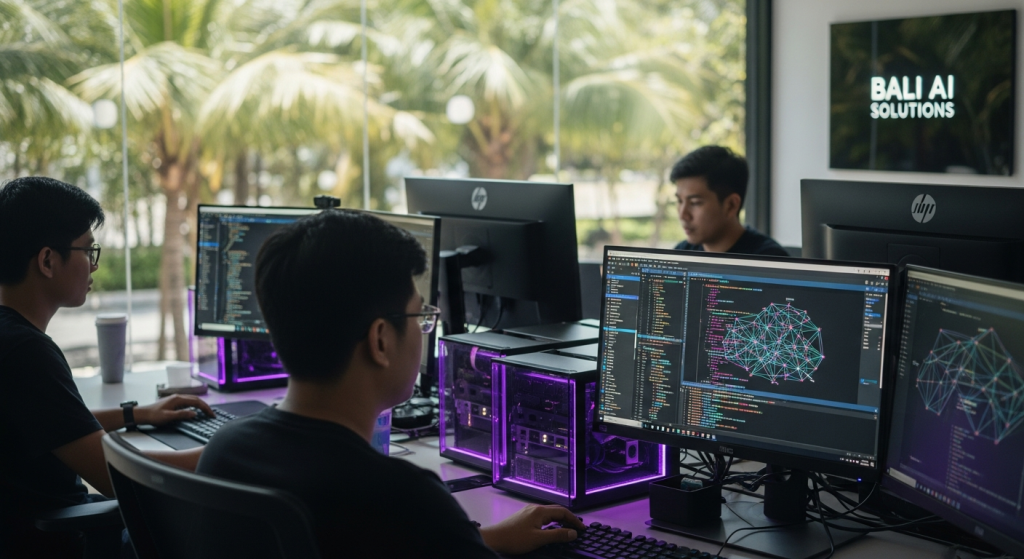
The humid air of Canggu carries the hum of innovation, a distinct current beneath the drone of scooters and distant surf. Here, the future of business intelligence takes shape, forged by minds drawn to Bali’s unique blend of inspiration and technological ambition. This island, globally recognized for its vibrant culture, now asserts its position as a dynamic hub for artificial intelligence development.
Bali’s Ascent as a Global AI Innovation Hub
Bali, an island synonymous with cultural richness, now rapidly transforms into a significant nexus for artificial intelligence innovation, particularly within Southeast Asia. The digital pulse of Canggu, Seminyak, and Ubud defines this evolution, establishing a vibrant corridor where expat founders and local talent converge. This strategic location, offering both a high quality of life and a robust digital infrastructure, attracts substantial investment in tech startups. Indonesia, the largest economy in Southeast Asia, projects its digital economy to reach $130 billion by 2025, a significant leap from previous years. The government’s “Making Indonesia 4.0” roadmap, launched in 2018, actively supports the adoption of advanced technologies like AI across key industrial sectors, including manufacturing and tourism. This initiative fosters an environment ripe for AI development, drawing attention from regional CTOs and enterprise B2B buyers seeking innovative solutions. The tech community in Bali thrives, evidenced by the proliferation of coworking spaces and tech events that regularly host hundreds of participants. Key players like the Ministry of Communication and Informatics (Kominfo) also support digital literacy and infrastructure development, ensuring that the necessary groundwork for AI advancement is firmly in place. Major fiber optic networks now connect the island, providing high-speed internet crucial for cloud-based AI operations. A drive from Canggu to Denpasar, Bali’s capital, spans approximately 20 kilometers, connecting the island’s creative tech communities with its administrative and enterprise clusters. This geographical proximity facilitates collaboration between nascent startups and established businesses seeking digital transformation. The island’s population stands at approximately 4.3 million people, contributing to a diverse talent pool that includes graduates from esteemed Indonesian universities such as Institut Teknologi Bandung (ITB) and Gadjah Mada University. These institutions increasingly offer specialized programs in data science and AI, fueling the local talent pipeline.
Defining Core AI Software Solutions from Bali
The artificial intelligence software solutions emanating from Bali cater specifically to the intricate demands of enterprise B2B buyers and fast-growing startups across the Asia-Pacific. These offerings extend beyond mere software provision; they encompass comprehensive digital transformation consulting, B2B SaaS product development, and bespoke AI engineering. Firms operating from Bali frequently specialize in areas such as predictive analytics, where machine learning models forecast market trends, consumer behavior, or operational efficiencies with high accuracy. For example, a retail enterprise might leverage AI for inventory optimization, reducing stockouts by 15% and improving supply chain resilience. Natural Language Processing (NLP) solutions are another cornerstone, enabling businesses to automate customer service, analyze sentiment from vast datasets, and streamline content generation. A financial institution could deploy NLP to process thousands of customer queries daily, enhancing response times by up to 30%. Computer vision applications also see significant development, particularly for industries requiring automated quality control, security surveillance, or advanced data extraction from visual media. A manufacturing plant could implement AI-powered vision systems to detect product defects with 99% accuracy, minimizing waste. Bali-based AI solution providers also excel in developing custom SaaS platforms, designed from the ground up to integrate seamlessly into existing enterprise architectures. These platforms often incorporate proprietary algorithms, offering a competitive edge in sectors like e-commerce, healthcare, and logistics. The average project lifecycle for a complex AI solution, from conception to deployment, often spans 6 to 12 months, depending on scope and client requirements. Many Bali AI Solutions leverage cloud computing platforms like AWS, Google Cloud, and Azure, ensuring scalability and global accessibility for their products. This focus on robust, scalable infrastructure allows client operations to expand without significant re-engineering costs. The expat-led and local teams foster a culture of agile development, delivering iterative improvements and rapid prototyping, which is critical in the fast-evolving AI landscape.
Navigating Indonesia’s AI Regulatory Landscape and Certifications
Operating within Indonesia’s dynamic AI sector requires a thorough understanding of the national regulatory framework and adherence to international best practices in data security and intellectual property. The Indonesian government actively formulates policies to govern the burgeoning digital economy, with a strong emphasis on data privacy and consumer protection. Key legislation includes the Personal Data Protection Act (PDP Law), enacted in 2022, which mandates strict rules for the collection, processing, and storage of personal data. This law aligns with global standards like GDPR, requiring explicit consent for data usage and stipulating severe penalties for breaches, including fines up to 50 billion Rupiah (approximately $3.2 million USD) or imprisonment. Companies offering AI solutions in Bali must ensure their algorithms and data handling practices comply with these stringent regulations, particularly when dealing with sensitive information for sectors like finance or healthcare. Furthermore, intellectual property rights are protected under Indonesian Law No. 28 of 2014 concerning Copyright and Law No. 13 of 2016 concerning Patents. AI-generated outputs and proprietary algorithms developed by Bali-based firms are afforded legal protection, safeguarding the innovations of expat founders and local developers. For enterprises seeking AI partners, certifications play a crucial role in validating a provider’s commitment to quality and security. ISO 27001, an international standard for information security management systems, is highly sought after, demonstrating robust security protocols. Many firms also pursue ISO 9001 for quality management, ensuring consistent service delivery and client satisfaction. The Indonesian National Standard (SNI) also provides frameworks for various technological products and services, though specific SNI for AI is still evolving. Data localization requirements, while not as strict as in some other countries, often prefer data storage within Indonesian territory for certain government and critical infrastructure data. Indonesia’s data privacy landscape continues to mature, prompting AI developers to design solutions with privacy-by-design principles from the outset. This proactive approach minimizes compliance risks and builds trust with B2B clients who prioritize data governance.
Choosing Your Bali AI Solutions Partner: A Strategic Framework
Selecting the ideal AI solutions partner in Bali demands a structured approach, especially for enterprise B2B buyers, Asia-Pacific startups, and regional CTOs. A robust framework ensures alignment with business objectives, technological requirements, and long-term strategic goals. First, evaluate the partner’s **specialized expertise**. Does their portfolio demonstrate proficiency in the specific AI sub-niches relevant to your needs, such as predictive analytics for financial services or computer vision for manufacturing? A provider with a proven track record in your industry vertical, having completed at least five similar projects, often yields better outcomes. Second, assess their **technical capabilities and talent pool**. Inquire about the qualifications of their AI engineers, data scientists, and software architects. Many Bali-based firms employ professionals with advanced degrees from top universities and certifications in machine learning frameworks like TensorFlow or PyTorch. The average tenure of senior AI engineers in reputable firms often exceeds five years. Third, consider their **project management methodology and communication protocols**. Agile development, characterized by iterative cycles and continuous feedback, is a strong indicator of efficiency and adaptability. Clear communication channels, including dedicated project managers and regular reporting, are paramount for successful collaboration across time zones. Fourth, scrutinize their **data security and compliance adherence**. As discussed, adherence to Indonesia’s PDP Law and international standards like ISO 27001 is non-negotiable. Request detailed information on their data handling practices, encryption protocols, and disaster recovery plans. A reputable partner invests significantly in cybersecurity measures, often allocating 10-15% of their operational budget to security infrastructure. Fifth, evaluate **scalability and future-proofing**. Can the proposed AI solution evolve with your business needs? Does it integrate with existing systems? A future-proof solution considers growth trajectories and technological advancements, ensuring a return on investment over a 3-5 year horizon. Finally, consider **cultural fit and cost-effectiveness**. While Bali offers competitive pricing compared to Western markets, ranging from 30% to 50% lower, ensure the cultural synergy fosters productive collaboration. A transparent pricing model, detailing all costs from development to maintenance, prevents unforeseen expenditures. This comprehensive framework guides enterprises towards strategic partnerships that drive meaningful digital transformation.
Key Drivers of Innovation in Bali’s AI Ecosystem
The innovation landscape within Bali’s AI ecosystem is propelled by a confluence of factors, ranging from a vibrant startup culture to strategic government initiatives and a growing pool of skilled talent. Expat founders, drawn by Bali’s unique lifestyle and collaborative environment, contribute significantly by injecting international best practices and venture capital networks. Many of these entrepreneurs establish companies that become leading providers of Bali AI Solutions, attracting global clients. Simultaneously, local Indonesian talent, increasingly educated in AI and data science, forms the backbone of development teams. Universities like Udayana University in Denpasar are enhancing their curricula to produce graduates ready for the demands of the tech industry, often collaborating with private sector firms on research projects. For instance, a recent university-industry partnership developed a new computer vision algorithm for local agricultural monitoring, improving crop yield predictions by 10%. The presence of numerous coworking spaces and tech communities in areas like Canggu and Ubud fosters a culture of knowledge sharing and collaboration. These hubs regularly host workshops, hackathons, and networking events, which accelerate skill development and idea generation. The digital nomad visa, introduced by the Indonesian government, further encourages international talent to reside and work from Bali, enriching the local tech scene with diverse perspectives and expertise. Government support, exemplified by initiatives like “Making Indonesia 4.0,” actively promotes the adoption of AI across various sectors. This includes incentives for research and development, as well as regulatory sandboxes for testing innovative AI applications. The goal is to elevate Indonesia into a top-10 global economy by 2030, with a significant contribution from its digital industries. Making Indonesia 4.0 outlines specific targets for technology adoption across five priority sectors: food and beverage, automotive, electronics, chemicals, and textiles. Furthermore, the increasing availability of venture capital and angel investment, both from within Indonesia and internationally, provides crucial funding for promising AI startups. This financial backing allows companies to scale operations, invest in advanced R&D, and attract top-tier talent, solidifying Bali’s reputation as a formidable AI innovation hub.
The Future Trajectory of AI Development in Indonesia
Indonesia stands at the cusp of a significant technological transformation, with artificial intelligence poised to be a primary catalyst for economic growth and social development. The future trajectory of AI development in the archipelago is characterized by ambitious government strategies, increasing private sector investment, and a concerted effort to cultivate a world-class AI talent pool. The national vision aims to position Indonesia as a leader in Southeast Asian AI innovation, leveraging its vast digital market and young, tech-savvy population. Projections suggest that AI could add approximately $366 billion to Indonesia’s GDP by 2030, a substantial contribution to the overall economy. This growth is underpinned by continuous infrastructure development, including the expansion of 5G networks and cloud computing capabilities across the major islands. The government, through agencies like the National Research and Innovation Agency (BRIN), is actively funding AI research projects focused on solving local challenges, such as smart city solutions for urban centers like Jakarta and Surabaya, or agricultural AI for enhancing food security. Collaboration between academia and industry is intensifying, with more universities launching specialized AI centers and partnering with tech companies for practical applications. For instance, a joint initiative recently deployed AI-powered traffic management systems in a pilot city, reducing congestion by 18% during peak hours. The private sector, particularly B2B SaaS providers and digital transformation consultants, continues to drive demand for advanced AI solutions. Enterprises increasingly seek to automate processes, personalize customer experiences, and gain deeper insights from data. Indonesia’s economy benefits from this digital acceleration, with AI acting as a key enabler for efficiency and competitiveness. The regulatory framework is also expected to evolve, providing clearer guidelines for ethical AI development, data governance, and algorithmic transparency, crucial for maintaining public trust and fostering responsible innovation. Furthermore, the rise of specialized AI hubs beyond Bali, in cities like Bandung and Yogyakarta, signals a decentralized growth model, spreading technological prowess across the nation. This broader ecosystem ensures a resilient and diverse talent pipeline, positioning Indonesia as a compelling destination for AI investment and development for decades to come.
As Bali solidifies its standing as an AI powerhouse, companies seeking transformative digital solutions find a robust ecosystem here. From strategic consulting to bespoke software engineering, the island’s vibrant tech community delivers impactful AI solutions. Discover how our expertise can accelerate your digital journey; connect with Bali AI Solutions today to explore partnership opportunities that redefine your operational efficiency and market presence.